Walk right into any hectic coffee shop over Street, a sporting activities ground on a Saturday morning, or a family members barbeque by the Seeker River, and you'll see a hundred tiny risks all of us consider approved. An unsafe flooring, a hot plate, a stray cricket ball, a concealing under an outing rug. Most of the time nothing results it, till something does. That is the minute a few clear steps and a calm set of hands make all the difference. A strong Maitland first aid course offers you those hands, and extra importantly, the judgement behind them.
First help training in Maitland is useful, proof based, and created for regular individuals that wish to show self-confidence. Whether you choose a general first aid training course in Maitland or a concentrated mouth-to-mouth resuscitation course Maitland suppliers run as short refreshers, the educational program builds skills that hold up under stress. You discover when to touch and when to step back, exactly how to lead in a tiny situation, and exactly how to hand over to paramedics with helpful detail. The practices you develop become muscle memory. Below are the core skills and the reasoning behind them, attracted from years of mentor and from many neighborhood scenarios where fast activity changed outcomes.
Reading a Scene Prior to You Touch a Patient
The most usual error I see in brand-new students is rushing directly to the casualty. First aid training Maitland programs start with scene assessment because your security comes first. You check for website traffic, live wires, aggressive spectators, unstable frameworks, dripping gas, and anything else that could transform one casualty into 2. Inside an office, that could be an equipment that hasn't been powered down. At a country home, it might be an unreliable horse or a loose gate near a hectic road.
You additionally triage. If there are numerous people harmed, you identify who needs aid first. Breathing issues and severe blood loss come before broken wrists or little lacerations. This triage way of thinking is not chilly, it is reasonable. It saves the most life with the moment and hands you have.
In Maitland first aid training courses, you'll exercise these telephone calls with practical scenarios. Instructors phase disorder with objective, and you find out to spot the silent threat in the edge, not simply the loud discomfort before you. That behavior sticks.
Primary Survey: DRSABCD Without the Jitters
Every Maitland emergency treatment training path gives you the same backbone, commonly summed up as DRSABCD. By the end of a day, you will certainly run this sequence efficiently also when individuals are yelling around you.
- Danger: You see to it the area is secure for you, the person, and others. Response: You look for an action utilizing voice and touch. Send for assistance: You call 000 very early. You do not wait on assurance. Early activation conserves mins, and minutes matter. Airway: You open and clear the air passage, making use of head tilt and chin lift if needed. Breathing: You look, pay attention, and feel for typical breathing. Occasional gasps do not count. CPR: If there is no regular breathing, you begin compressions set in the facility of the chest. Defibrillation: You use an AED as quickly as it arrives and follow the prompts.
Under guideline, this quits being a chant and becomes a flow. I have actually viewed students go from tentative faucets to crisp commands in one mid-day. That dive is not blowing, it is the product of good training and hands-on repetition that a Maitland first aid training course constructs in.
CPR That Functions When It Counts
CPR training Maitland suppliers supply tends to focus on high quality instead of theatrics. You will certainly exercise compressions on adult, child, and infant manikins. The goal is consistent deepness and rate, plus very little interruptions. Present finest method targets roughly 100 to 120 compressions per minute with a depth of about one-third of the chest for kids and at the very least 5 centimeters for grownups, allowing full recoil. Those numbers are not facts, they match the heart's mechanics.
A few sensible points that separate pass from real efficiency:
- Stance: Knees near the patient's torso, shoulders stacked over your hands. This allows your body weight do the work and lowers fatigue. Counting: Silently matter in your head or aloud to maintain tempo. Interruptions sneak in. Counting brings you back to pace. Swapping: If an additional trained person exists, swap every 2 mins to keep compressions strong. AED pads: Dry the upper body if extremely damp, shave promptly if hair protects against adhesion, prevent placing pads over implanted tools, and do not touch during shock analysis.
A CPR program Maitland residents take as a refresher course every one year pays off. Abilities discolor within months without method. A short cpr correspondence course Maitland teachers run can recover your confidence and improve your method. Anecdotally, individuals who return yearly preserve far better deepness and less pauses.

Using an AED Without Overthinking
Automated outside defibrillators are developed for laypeople. The tool speak with you, but your job is to act quickly and emphatically. Normal stumbling blocks consist of fear of hurting the individual, complication about pad positioning, and crowd control. When you train in a Maitland emergency treatment training course, you will certainly run multiple AED drills until the steps feel plain.
You discover to expose the breast, clean away dampness, place pads correctly complying with the representations, and press securely to lower air gaps. You discover to announce "stand clear" plainly and check aesthetically that nobody is touching the patient before evaluation and shock. You return to compressions the moment the device informs you to. If there is one motto worth executing of the area, it is this: pads on early, hands off just when the maker claims so.
Bleeding Control: Simple Tools, Strong Hands
Severe blood loss is time delicate. You will certainly practice direct stress utilizing your hands, a folded dressing, or a rolled bandage. Pressure indicates firm and continual, not a mild hold while you seek tape. If the initial clothing soaks via, you add one more on top, you do not peel off the very first one off and disturb clotting.
Tourniquets have actually re-entered common emergency treatment basic first aid training course advice for life-threatening blood loss from arm or legs. In Maitland emergency treatment training courses, you will certainly find out when a tourniquet is appropriate, where to place it, and exactly how tight it needs to be. It is not a casual device. You record the moment and connect clearly to paramedics. On the torso, you can not tourniquet, so you load and press. With experience, you obtain a feel for how much pressure in fact reduces an arterial hemorrhage. It is more than many people expect.
For nosebleeds, you pitch forward and pinch the soft part of the nostrils for 10 mins without peeking. For minor cuts, you water with tidy water, apply a straightforward clothing, and offer guidance regarding indicators of infection. This could sound standard, but done well it prevents a surprising variety of unneeded general practitioner visits.
Choking: Quiet, Quick, and Focused
Choking occasions are distressing due to the fact that they intensify swiftly. You will certainly discover to acknowledge the difference in between an efficient coughing, which you encourage, and an inadequate one, which demands activity. For grownups and children, that series is strong back strikes complied with by breast thrusts if needed. For babies, you utilize a different hold and gentler pressure, yet with equivalent intent.
The key is body technicians. In a course, you exercise placing somebody ahead so gravity aids dislodge the blockage. You additionally rehearse the minute you change from back blows to chest thrusts. Doubt expenses time. When someone's face changes from panic to quiet and blue around the lips, you act.
Respiratory Emergencies: Asthma and Anaphylaxis
Local sports clubs and schools see a stable share of asthma flares. Maitland first aid training prepares you to make use of a spacer with a metered-dose inhaler, to trainer slow-moving breaths, and to look for exhaustion. You are shown to rise early when reducer puffs are inadequate and to support a resting placement that reduces work of breathing.
Anaphylaxis demands instant adrenaline. You will certainly exercise with trainer auto-injectors, find out mid-outer thigh placement via clothes, and hold consistent for the advised seconds to make sure shipment. You stick with the individual, lay them level unless breathing is harder because placement, and plan for a second dose if signs and symptoms linger after a couple of minutes. You keep the utilized device for paramedics to see. There is no space for dithering in anaphylaxis. The self-confidence to act comes from rep in class.
Fractures, Strains, and Spinal Precautions
A tidy break on a netball court looks dramatic, but it is website commonly secure with basic assistance. You will learn to line up a limb delicately only if there is no resistance, after that immobilise the joints over and below with a splint or improvised supports. Cold packs help reduce discomfort and swelling. A sling can transform a chaotic scene into a controlled one in under a min when used well.
Spinal factors to consider need judgement. If the system suggests it, you maintain the head and neck in line and instruct the person to remain still. You do not wrench a person about unless there is an instant risk such as fire or drowning. With several -responders, you exercise a log roll. With one, you concentrate on hands-on in-line stabilisation and clear communication. Trainers in Maitland emergency treatment courses spend time on this due to the fact that bad spinal handling can turn a minor injury right into a major one.
Burns: Air conditioning, Treatment, and Recognizing What Not to Do
Burns prevail in cooking areas and workshops. The rule you take home is trendy the shed, not the individual. Running awesome water over the shed for 20 minutes within three hours of injury continues to be among one of the most efficient treatments. You learn to get rid of rings and tight apparel early before swelling traps them. You avoid creams, oils, and ice, every one of which worsen outcomes.
For chemical burns, prolonged watering is essential. For electrical injuries, your initial step is to confirm the power source is off before you touch the patient. In class, this is substitute, but the message is drilled in. Cover burns with non-adherent dressings or tidy plastic wrap. The wrap works as an obstacle, not a tourniquet. For face burns or circumferential arm or leg burns, you rise swiftly and check the respiratory tract, which can swell.
Diabetes, Seizures, and Fainting: Handling the Unseen
Not all emergency situations bleed or shout. An individual who goes pale and clammy at the check out may be hypoglycaemic. You will learn to try to find a clinical ID, to provide fast-acting glucose if the individual is mindful and able to swallow, and to reassess after 10 to 15 minutes. If they improve, you recommend a more significant snack. If they do not, or if they weaken, you call an ambulance.
Seizures require calm and little, precise actions. Clear the area to stop injury, support the head, and time the seizure. You do not restrain limbs, and you do not put anything in the mouth. When the seizure quits, you put the person on their side and monitor breathing. If a seizure lasts beyond roughly 5 mins, or repeats without healing, it is time-critical.
Fainting is typically quick. Lay the person flat, lift legs if ideal, and watch for healing. The exemption is if there is injury from a loss or if fainting is part of a bigger pattern such as upper body discomfort, which aims you towards a cardiac cause and a various playbook.
Child and Baby First Aid: Adjusting Hands and Mindset
First help and CPR Maitland courses usually consist of child-specific components because lots of attendees are moms and dads, trainers, or teachers. The physiological distinctions matter. Baby CPR uses 2 fingers for compressions on the breast bone, while youngster CPR might utilize one or two hands depending on size, yet the goal stays the exact same, one-third breast depth with full recoil. Rescue breaths are gentler, just enough to see upper body rise.
For high temperatures, you concentrate on convenience and liquids as opposed to compelled temperature targets. For croup-like coughings, you avoid steam and seek indicators of breathing distress that necessitate immediate treatment. Choking drills for infants mirror what you see in class videos, but it is the live coaching that fixes your angle and force so you work without creating harm.
Communication and Leadership: The Soft Abilities That Save Time
A well-run scene looks calm since a person is delegating. You learn to point and provide clear jobs: you call 000, you obtain the AED, you get rid of the entrance, you bring an emergency treatment set. Vague phone calls for assistance often generate no help in any way. A great Maitland first aid training session provides you phrases to utilize and exercise in stating them with authority.
You additionally discover to hand over to paramedics efficiently. The brief report covers what occurred, what you saw, what you did, just how the patient reacted, and any type of recognized medical history or drugs. Keep times if you can. A cool handover speeds treatment. Sloppy details prices minutes.
Legal, Moral, and Social Considerations
People ask about liability greater than they confess. In Australia, Good Samaritan securities cover individuals who act in excellent faith within their training. Your responsibility is to the level of your capability. You are not anticipated to be a doctor in a parking lot. A Maitland emergency treatment course will certainly clear up borders so you act strongly without overstepping.
Consent issues. For conscious adults, you ask authorization. For kids, you look for a moms and dad or guardian if present, but you do not postpone urgent care. For unconscious patients, authorization is suggested. Cultural level of sensitivity also comes up: valuing discreetness, explaining activities, and including household appropriately. In a varied town, these tiny courtesies build count on tense moments.
Building a Reliable First Aid Kit and Knowing Your Environment
You do not require an ambulance boot in your hatchback, yet you do need greater than a few band-aids. A practical set for everyday use covers dressings, plasters, saline or sterile water for irrigation, handwear covers, a thermal blanket, a triangular sling, a mouth-to-mouth resuscitation face guard, and a tourniquet if you are comfortable and trained to use it. In offices, the set must match the risks: even more eye laundry for workshops, shed dressings for kitchens, and extra immediate ice bags for sporting activities clubs.
Maitland has its quirks. Warm summertimes elevate the danger of dehydration and warmth disease. Riverbank tasks include sinking threats. Farms bring machinery injuries and snakebite concerns. A good instructor will weave neighborhood situations right into the program so you recognize hazards you really face, not just book instances. If snakebite emergency treatment is new to you, you will learn pressure immobilisation bandaging, the distinction from straightforward sprain bandaging, and the importance of keeping a bitten limb still.

Refreshers, Recertification, and Structure a Safety Culture
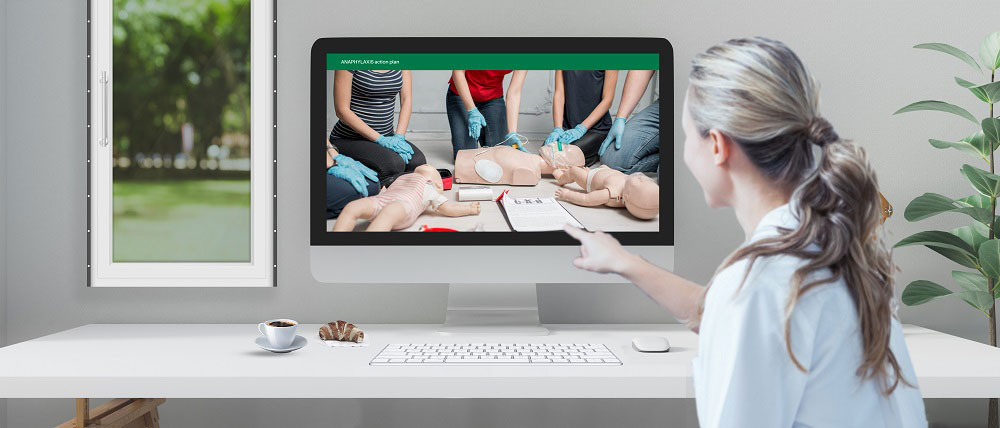
Skills fade. Confidence discolors much faster. That is why cpr programs Maitland suppliers run as brief refresher courses are worth reserving annually, and why a fuller first aid certification Maitland employers typically need is normally restored every 3 years. The piece of paper matters for conformity, however the true value depends on shaking off rust. In my experience, individuals who revisit training keep in mind subtle points they missed the first time, like when to get rid of an auto-injector or exactly how to place a person with a suspected back injury who is also vomiting.
Workplaces that deal with emergency treatment as a living skill, not a tick-box, do much better in real occasions. They run drills, keep kits, and post AED places plainly. They likewise reward individuals that speak out about threats prior to someone gets hurt. If you are in charge of scheduling an emergency treatment course in Maitland for your team, ask carriers about situation customisation. The training sticks when it appears like your workday.
What Sets Top quality Training Apart
Not all training courses really feel the very same. A strong Maitland emergency treatment program equilibriums concept with rep on the floor covering. You ought to leave perspiring, a little exhausted, and a great deal surer of yourself. Instructors that have worked with the road or in hectic clinics bring tales that illuminate the why behind each step. Good training likewise appreciates time. If a session runs long, there ought to be a reason, not filler.
Providers like Emergency treatment Pro Maitland and various other well-known organisations often tend to purchase newer manikins that provide comments on compression depth and price. That real-time advice raises your technique. They additionally maintain course sizes practical so you are not waiting an hour for a turn. Whether you pick a basic emergency treatment and CPR program Maitland citizens favour or split it into separate components, seek that hands-on proportion and for instructors that deal with without shaming.
Two short checklists you will really use
- Recognise life dangers swiftly: no normal breathing, serious blood loss, anaphylaxis, choking that isn't removing, seizures longer than 5 mins, upper body discomfort with sweating and nausea. Do the next right point: call 000 early, start compressions if required, control bleeding with direct stress, use the AED as soon as it gets here, give adrenaline for believed anaphylaxis, put the person on their side as soon as safe to do so, and remain up until help takes over.
The Payback: Calmness in the Seconds That Count
The most striking modification I see in students by the end of a Maitland emergency treatment training course is not showy technique, it is grace. You learn not to yell unless you imply to, not to screw up with tape when a hand will do, not to lose a minute on something that can wait. That calm spreads. Families, teammates, and coworkers take their signs from you. Scenes settle. Care obtains better.
If it has been a while because your last session, publication a first aid and mouth-to-mouth resuscitation program Maitland teachers are running in the following month or two. If you lug the obligation for a team or club, take into consideration coordinating first aid programs in Maitland that align with your specific dangers. Keep your mouth-to-mouth resuscitation Maitland refresher course booked for the exact same time yearly. Maintain your set and change what you utilize. These tiny routines accumulate, and one average day, they will certainly matter to a person you care about.